Thermo-Structural Analysis of Support Structures
Mar 2023 | IDEAz, Cognizance, IIT Roorkee, India
Project Context
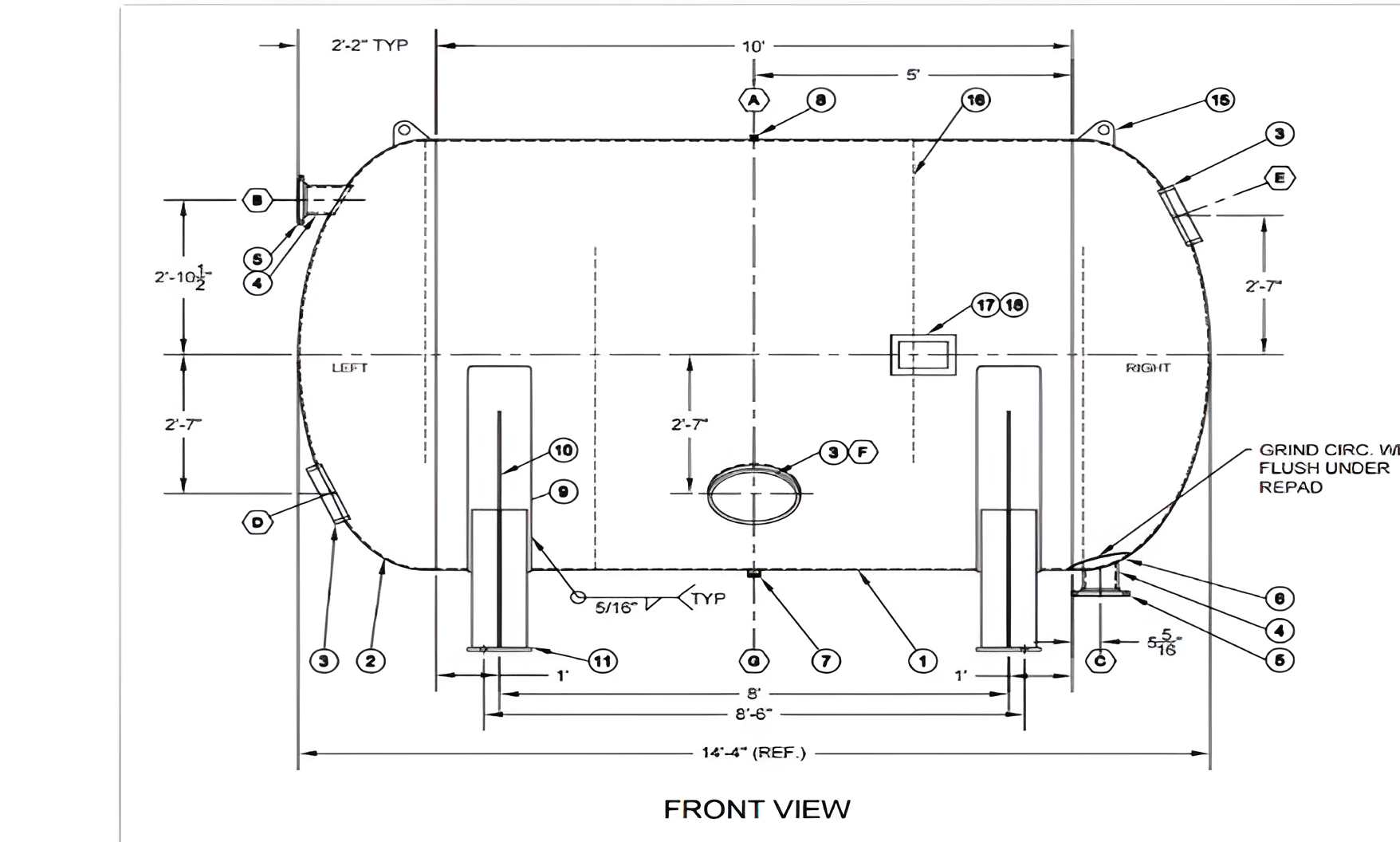
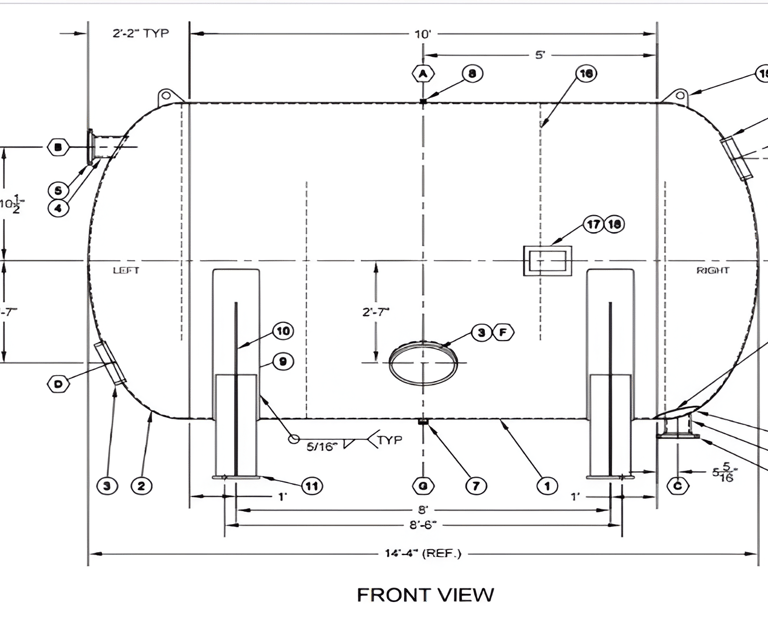
This project analyzed structural support configurations for a non-jacketed MSGL (Mild Steel Glass-Lined) pressure vessel used in high-pressure industrial applications. The focus was on understanding thermo-gravitational stress effects on different support types.
Engineering Problem
Support a fully loaded pressure vessel under combined thermal and gravitational loading
Compare structural performance of saddle, skirt, and lug supports
Identify deformation-prone support configurations
Evaluate adequacy of ASME-code-based preliminary designs
Approach & Methodology
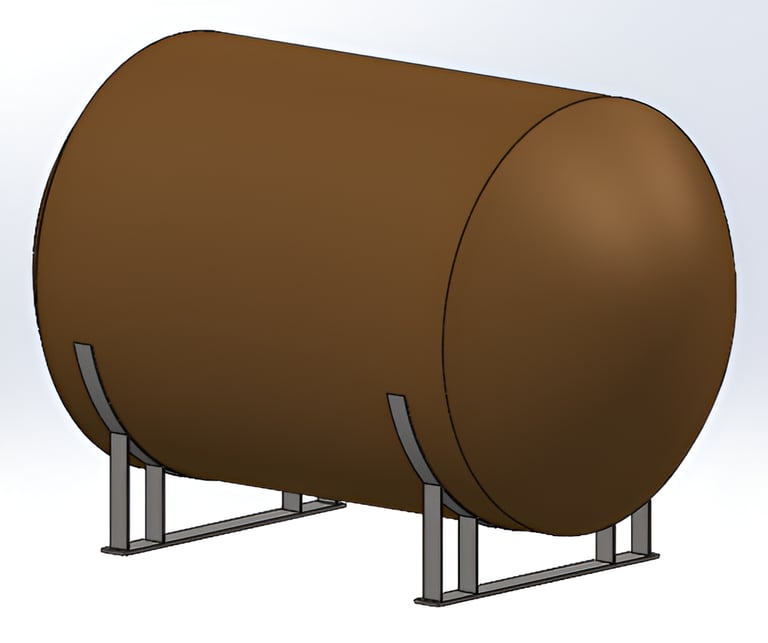
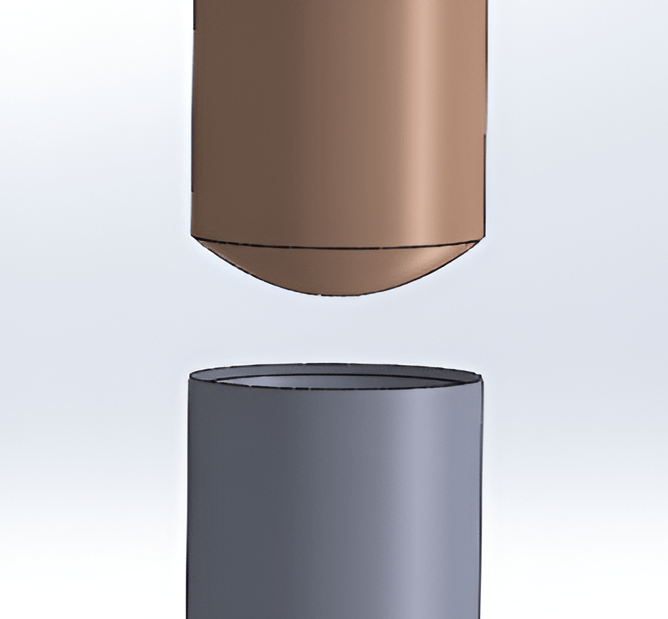
A pressure vessel was designed using ASME BPVC Section VIII guidelines and modeled in SOLIDWORKS. Vessel thickness was analytically determined for an internal pressure of 0.5 MPa, resulting in a total wall thickness of 7.5 mm including 1.5 mm glass lining. Support structures (saddle, skirt, lug) were modeled and assembled with the vessel.
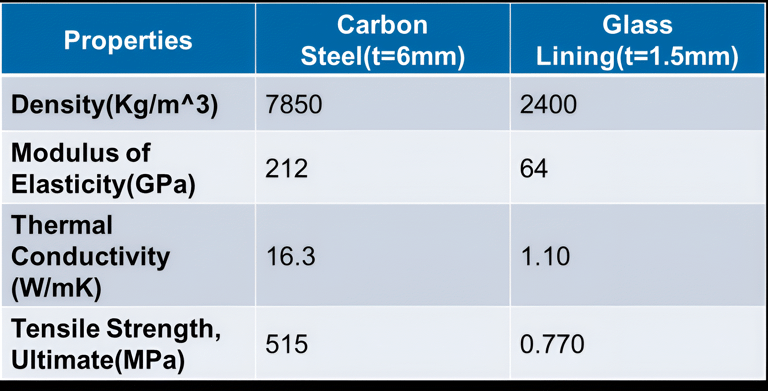
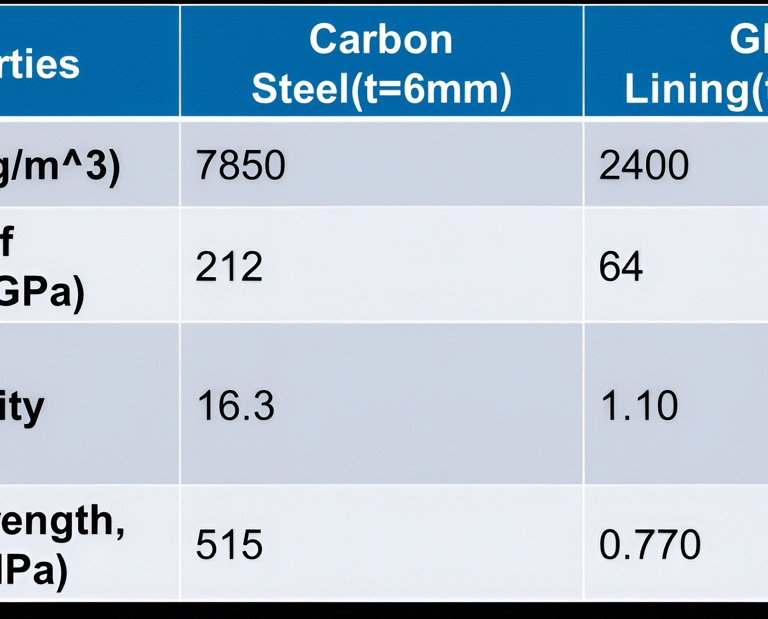
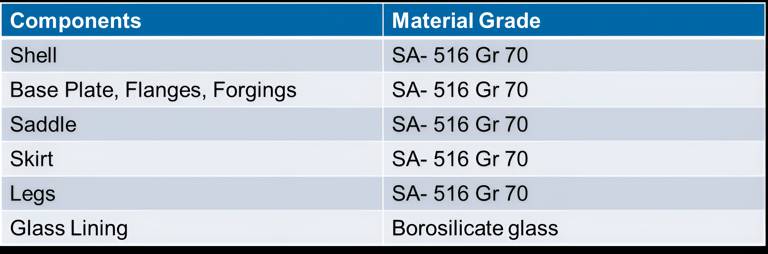
Material properties for carbon steel and borosilicate glass lining were assigned. Combined steady-state thermal and static structural FEM analyses were performed in ANSYS, applying internal temperature loading and total vessel weight as a downward force.
Key Results
Total vessel + fluid mass: 14,724 kg
Resulting gravitational load on supports: 144.45 kN
Thermal boundary conditions: 300 °C internal, 25 °C ambient
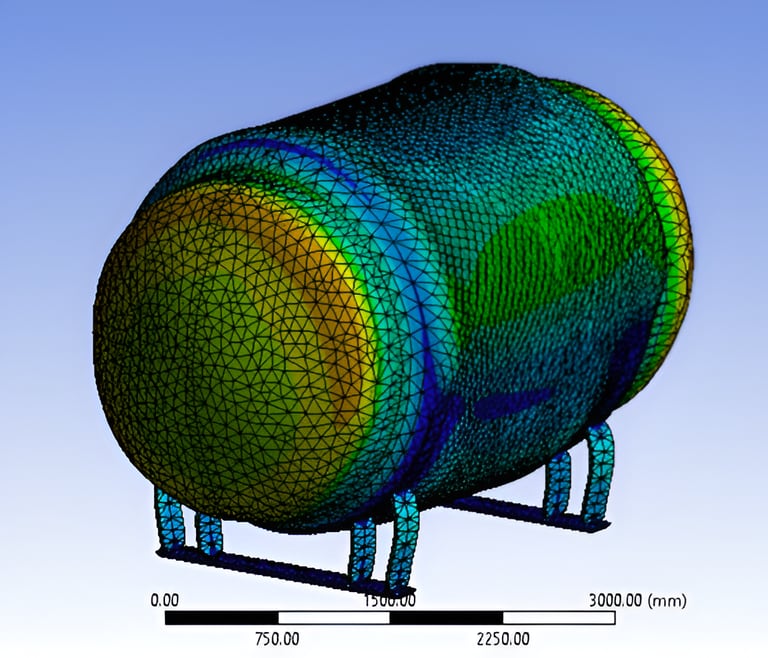
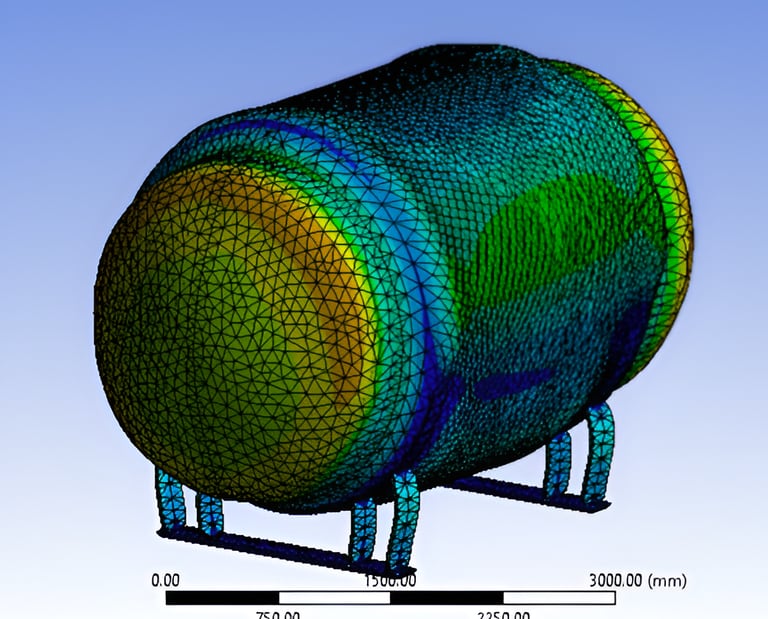
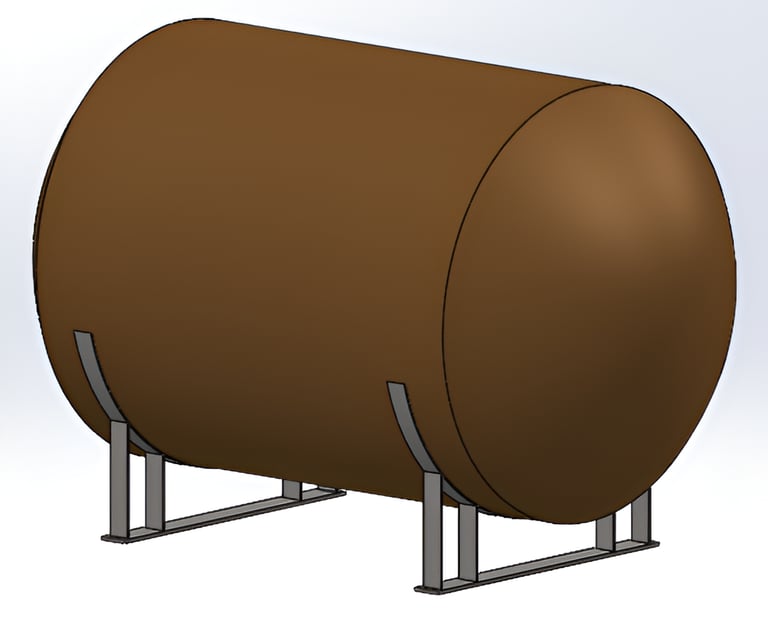
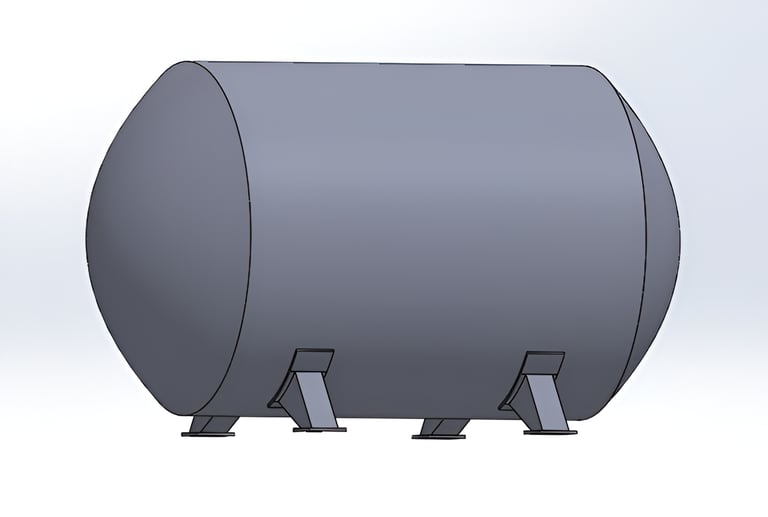
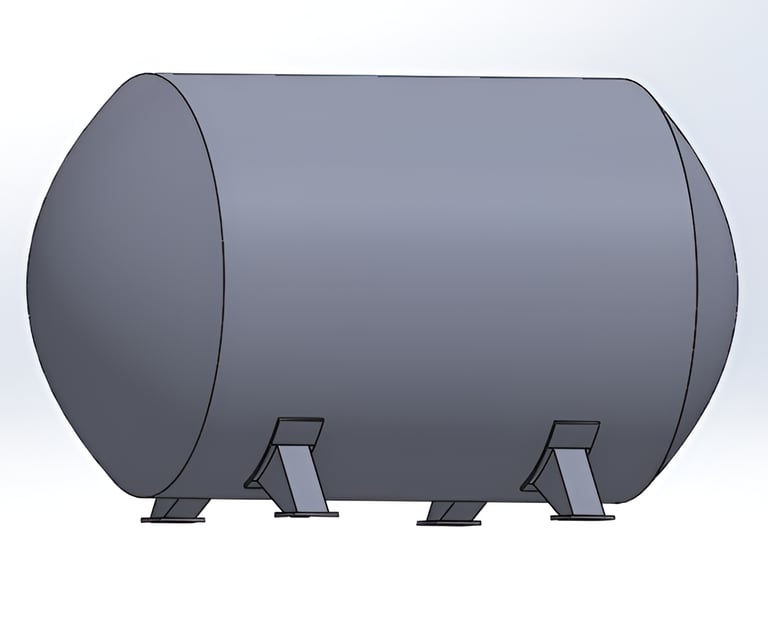
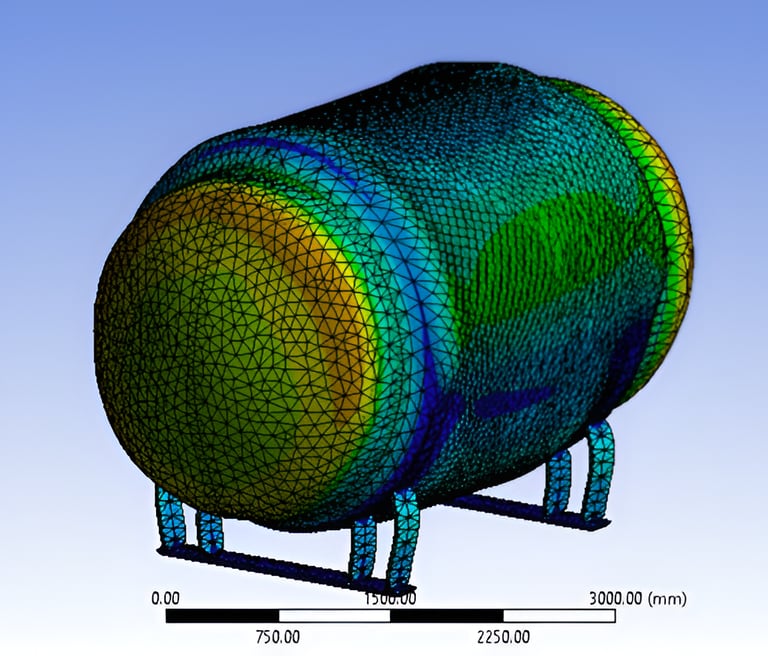
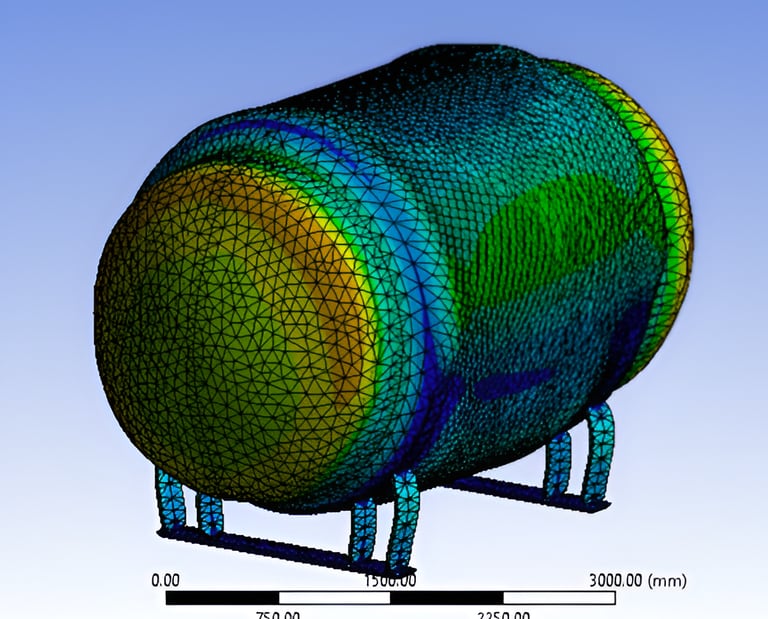
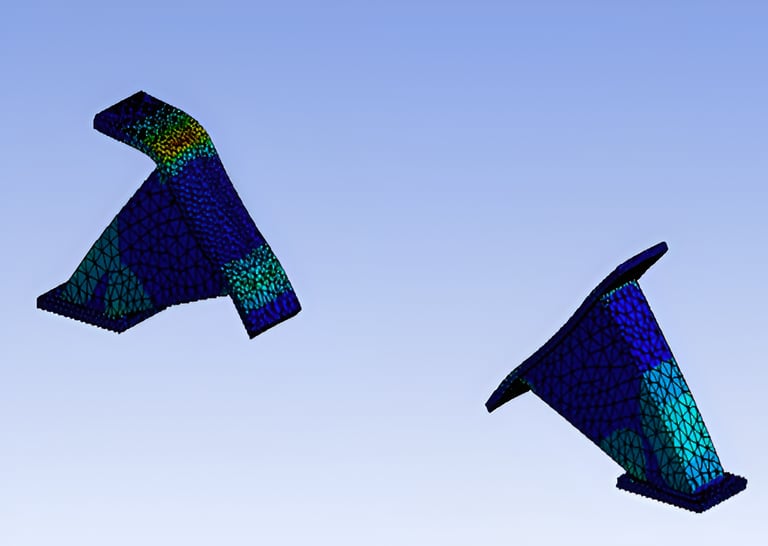
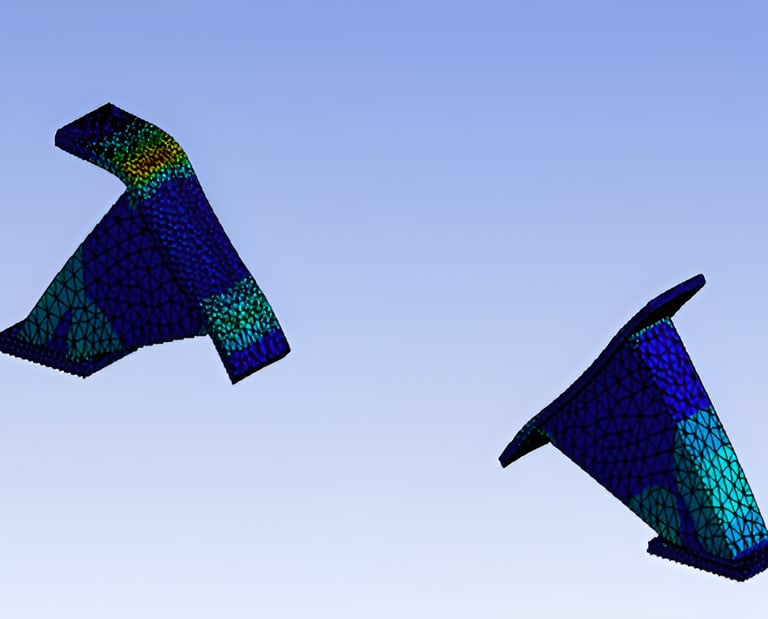
Saddle supports: Leg deformation observed; insufficient stiffness at chosen thickness
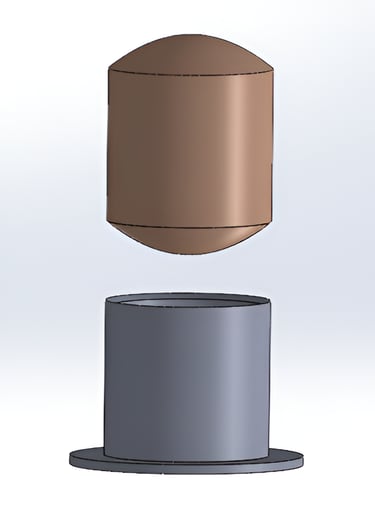
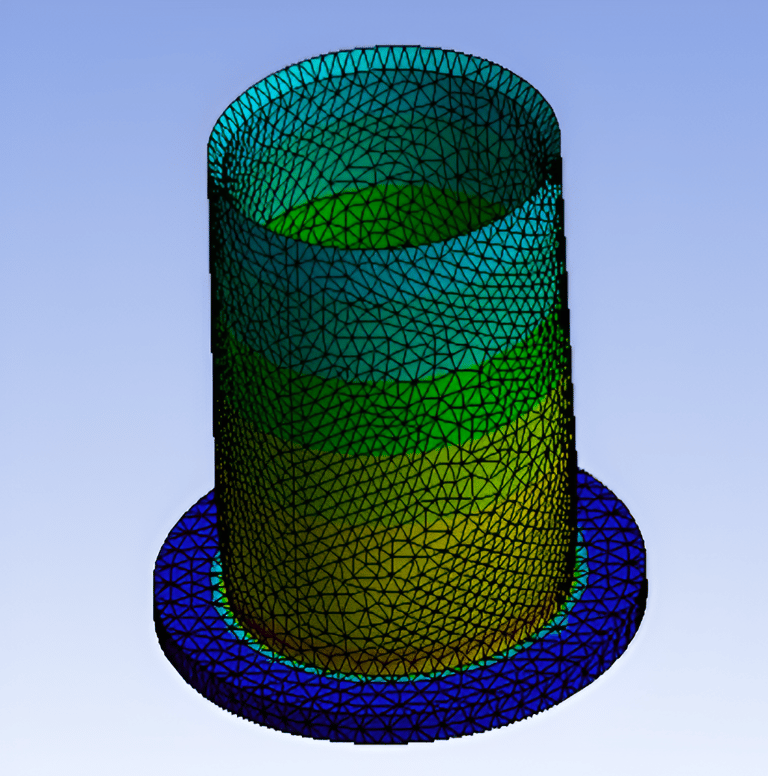
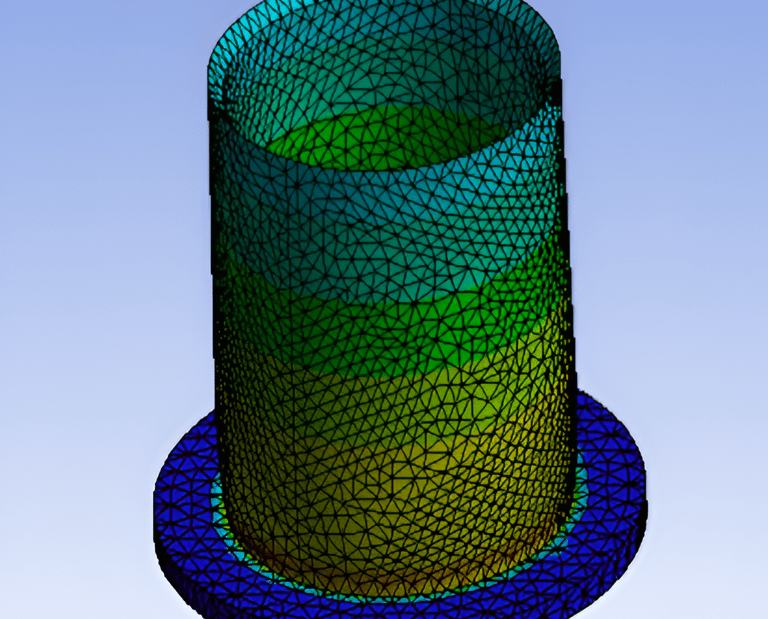
Skirt support: Withstood applied load with acceptable deformation
Lug supports: Severe deformation under gravitational loading; structurally inadequate in baseline design
Engineering Judgment & Trade-offs
Saddle and lug supports showed sensitivity to thickness selection and stress concentration, making them unsuitable without reinforcement. Skirt supports distributed load more uniformly but required geometric optimization for improved safety margins. The study highlighted the limitations of thin preliminary designs and the need for iterative thickness and geometry refinement.
Tools & Methods
SOLIDWORKS CAD, ANSYS Structural, ANSYS Thermal FEM, ASME BPVC design rules.
Outcome / Takeaway
The analysis demonstrated that skirt supports are structurally superior for heavy MSGL pressure vessels under combined thermo-gravitational loading. The project established a comparative FEM-based framework for selecting and improving pressure vessel support designs in industrial applications.