Crash Test Analysis
Crashworthiness analysis of formula-style chassis
Dec 2022 - Feb 2023 | Society of Automotive Engineers (S.A.E)
Project Context
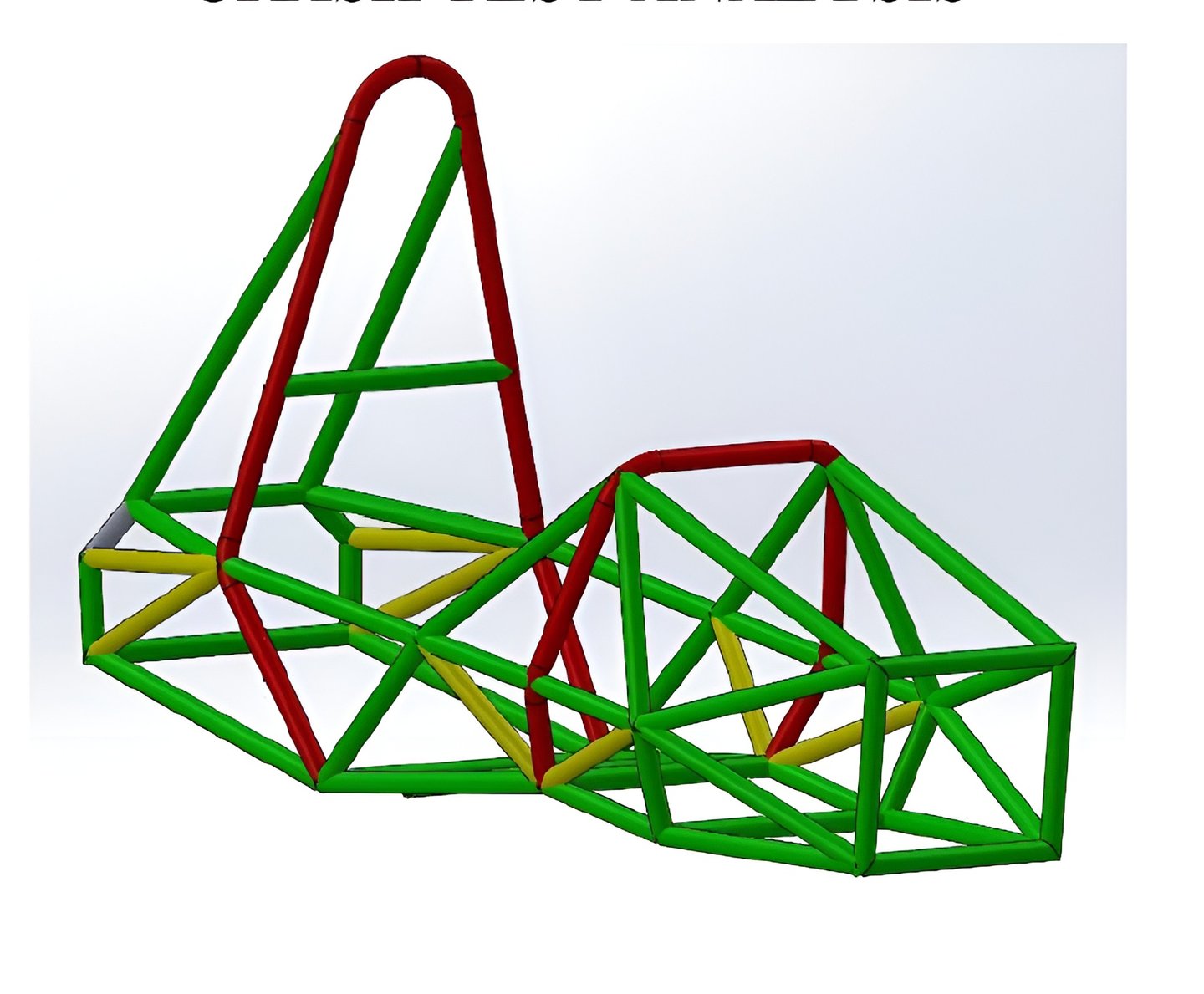
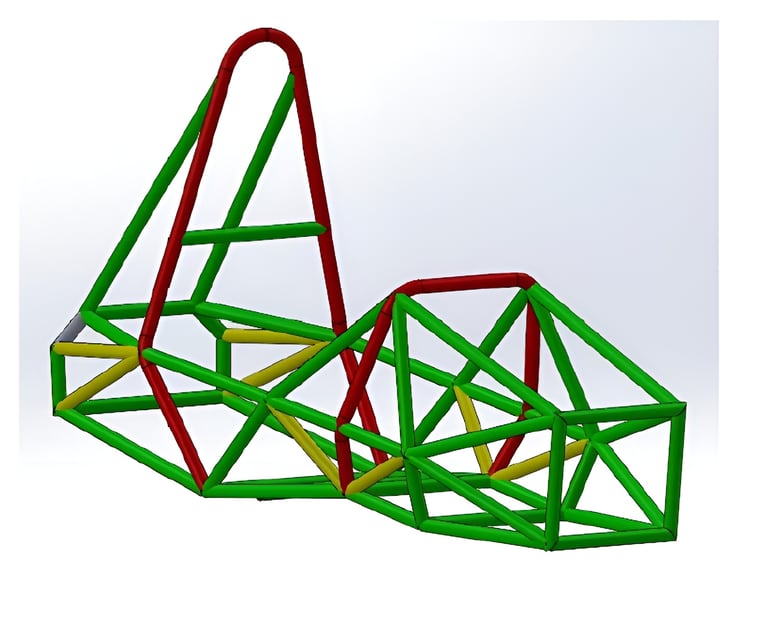
A Formula Student spaceframe chassis was designed under SAE rule constraints and evaluated for frontal crashworthiness. The study focused on assessing structural response under a prescribed longitudinal impact load to identify deformation and failure-prone regions early in the design cycle.
Engineering Problem
Ensure driver safety under a severe frontal impact scenario
Maintain structural integrity while minimizing chassis mass
Identify high-stress and high-deformation regions in a tubular spaceframe
Evaluate adequacy of a preliminary static-analysis approach for crash assessment
Approach & Methodology
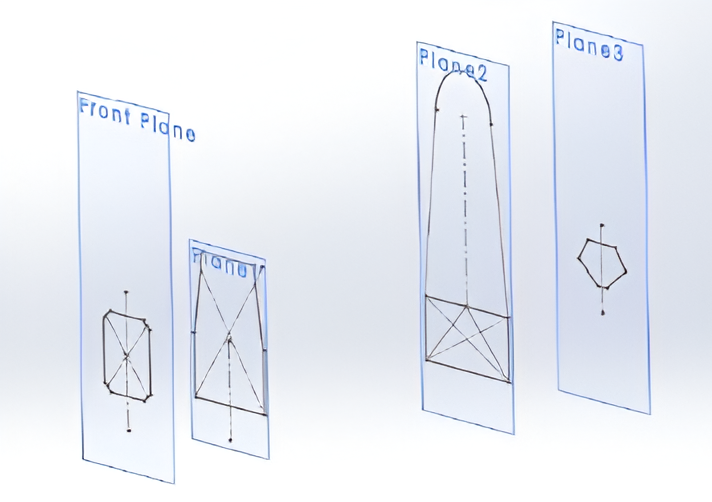
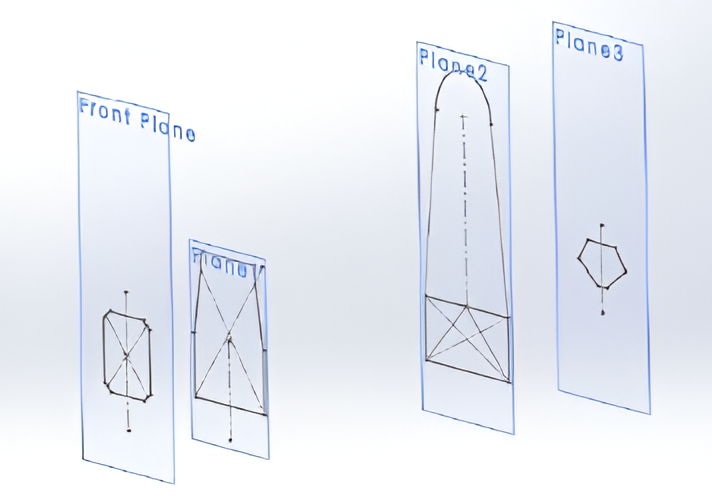
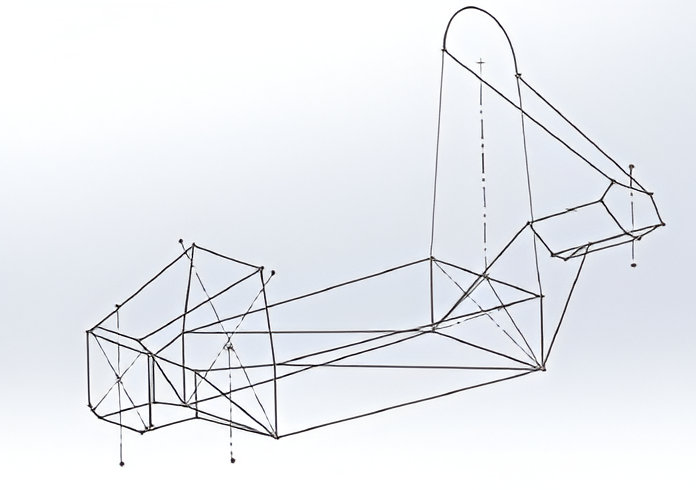
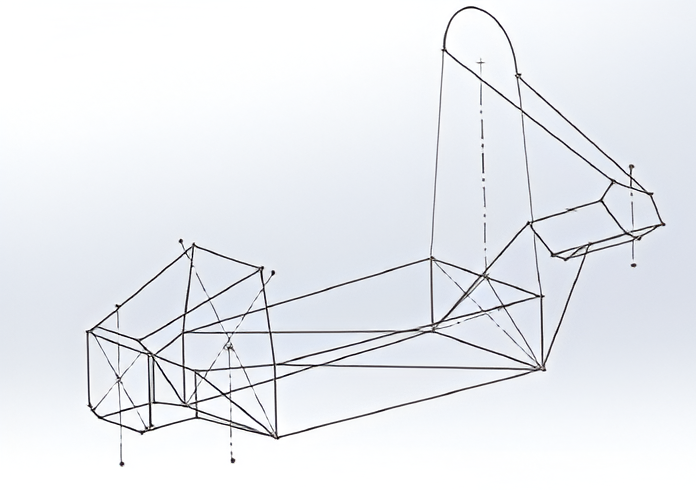
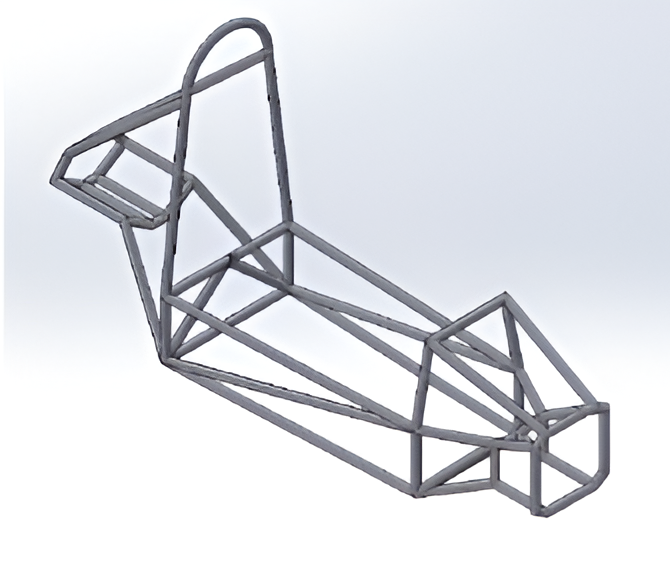
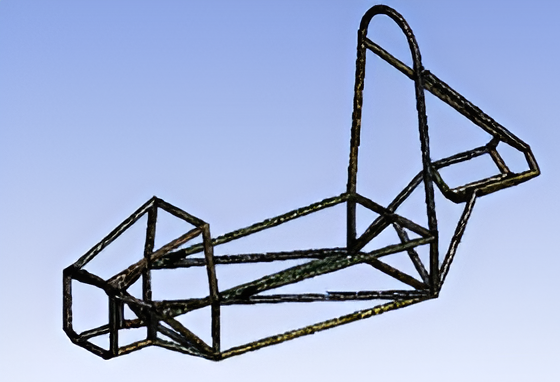
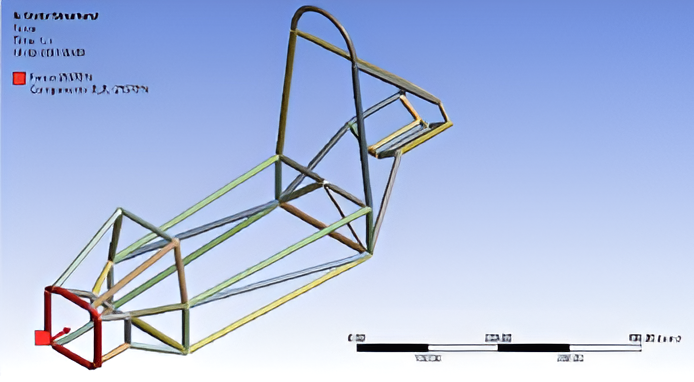
A full 3D chassis model was created using welded tubular members arranged via triangulation to minimize bending-dominated load paths. The model was imported into ANSYS Static Structural, assigned structural steel properties, and subjected to a rule-based equivalent frontal load. Deformation, von Mises stress, and factor of safety distributions were evaluated to guide structural refinement.
Key Results
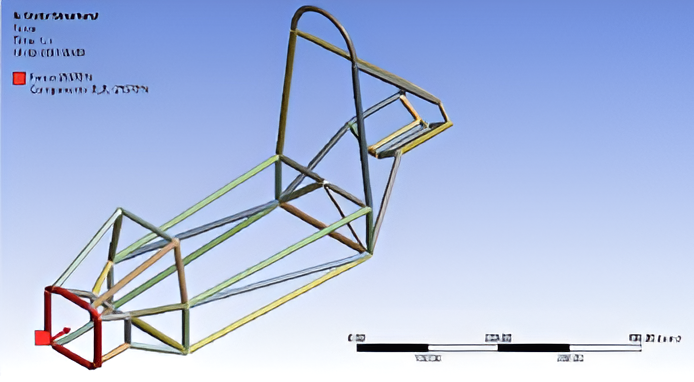
Frontal impact simulated using an applied longitudinal load of 21.87 kN at the front bulkhead
Large global deformations observed under the applied load, indicating insufficient stiffness in the baseline design
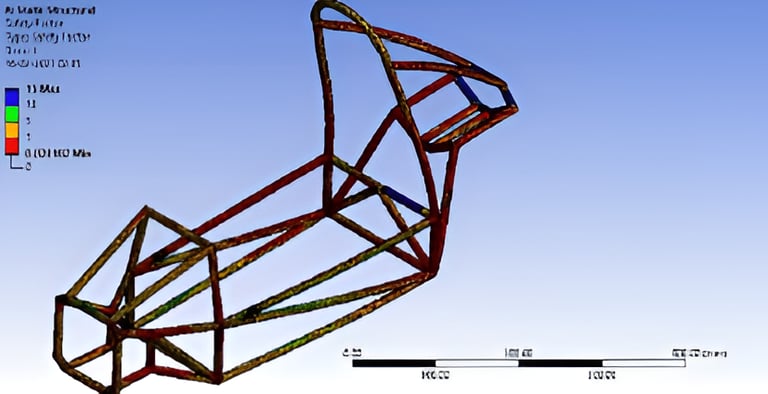
High von Mises stress concentrations identified across multiple load paths, not localized to a single member
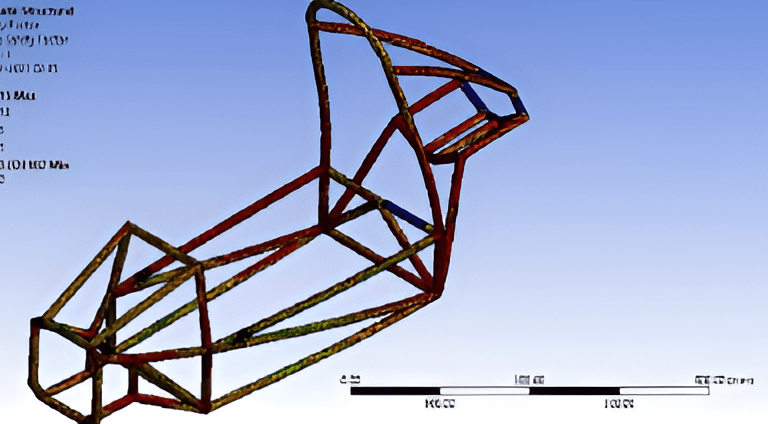
Factor of safety plots indicated widespread risk of structural failure under the imposed loading condition
Engineering Judgment & Trade-offs
Static structural analysis provided a conservative first-pass assessment but was insufficient to represent true crash dynamics. While triangulation reduced bending in individual members, overall stiffness remained inadequate, indicating the need for targeted reinforcement. Improving crash performance would require mass addition or redistribution, necessitating careful trade-offs between weight, stiffness, and compliance with Formula Student rules.
Tools & Methods
SOLIDWORKS, ANSYS Structural, CAD, FEA, tubular weldment modeling, rule-based load estimation.
Outcome / Takeaway
The analysis highlighted structural weaknesses in the initial chassis design and established the need for localized reinforcement and dynamic (explicit) crash simulation. The results informed subsequent design iterations aimed at improving crashworthiness without unnecessary mass increase.